 AVICENNA
Multimethod Endpoints
Diversify what your API has to offer with multiple endpoint methods, webhook listeners, and more!
We're excited to kick off the Avicenna Unsealed launch week with a major addition that'll change the way you use Avicenna!
So far, Avicenna has only supported the creation of basic GET endpoints, which provide the elementary needs an API might require, but doesn't fully take advantage of the countless things you can do with an API.
Today, we're extending these capabilities to all five request methods: GET, POST, PUT, PATCH, and DELETE! This addition opens up so many new opportunities for crafting endpoints to execute more specific tasks, such as sending an email when a Tally form is submitted and more!
How It Works
Nothing major has changed in terms of the way you craft endpoints in the Workshop, and most of the magic happens when you create a new endpoint.
To get started with multimethod endpoints, simply create a new endpoint from your Dashboard and select the method you need from the dropdown.
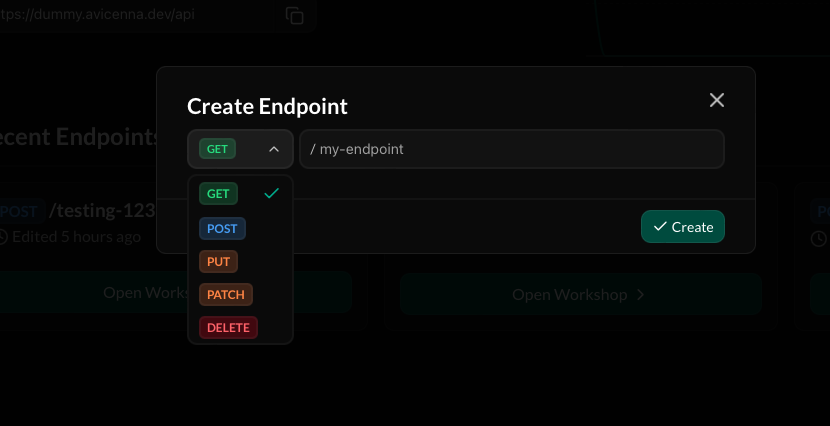 Choose a method from the Create Endpoint modal
Choosing a Method
It's important to choose the right method for your endpoint's use case.
Functionally, endpoint methods can be divided into two distinct categories: those with request bodies and those without. GET and DELETE are the only methods that do not contain request bodies.
A request body is an input body for an endpoint that can carry much more data than query parameters. This allows you to trigger actions with an endpoint, such as sending a long email or saving a blog post.
Most of the methods purposes are pretty much summed up in their names, but here's a simple summary of what each method is used for:
GET: Retrieve information.POST: Create new information.PUT: Replace existing information entirely.PATCH: Update part of existing information.DELETE: Remove information.
More detailed information regarding each method can be found in the Avicenna Docs.
Webhook Listeners
The addition of the POST method also allows for the creation of webhook listener endpoints.
Webhooks listeners are endpoints that can be provided to third-party platforms to trigger actions. Webhooks are widely offered by many software platforms and can all be integrated with Avicenna through webhook listeners.
We've written a tutorial guide for making a webhook listener that sends an email whenever a Tally form is submitted. This guide will help you understand the flow and structure of a webhook listener and teach the fundamentals needed to set one up for any third-party webhook!